
The Five Purposes of VOMC
Lives Rebuilt – Christ Revealed
“And they said to me, ‘The remnant there in the
province who had survived the exile is in great trouble
and shame. The wall of Jerusalem is broken down,
and its gates are destroyed by fire.’”
~ Nehemiah 1:3 ESV
“And I said to the king, ‘If it pleases the king,
and if your servant has found favour in your sight,
that you send me to Judah, to the city of my
fathers’ graves, that I may rebuild it.’”
~ Nehemiah 2:5 ESV
In my previous blog posts, I introduced the first three purposes of VOMC: (1) helping persecuted Christians advance the Great Commission, (2) providing practical relief and spiritual support, and (3) equipping persecuted Christians to love and win those who oppose the Gospel of Jesus Christ.
Expanding on this foundation, our fourth purpose is to help believers rebuild their lives and Christian witness in countries where they have formerly suffered oppression. This type of assistance typically occurs through relief and development initiatives within Christian communities, particularly when persecution subsides. Similar to Nehemiah’s deep desire to rebuild the lives of those who survived the exile, we at VOMC view it as our duty to aid the church in mending and strengthening its presence and influence in communities healing from persecution.

A notable example of this fourth purpose can be seen in VOMC’s work in southern Sudan between 2004 and 2011. Following years of devastating civil war that claimed over two million lives, Sudan found itself in a state of chaos and disarray. The country had suffered the ravages of war as southern rebels sought independence from the Islamic government in Khartoum, the nation’s northern capital. With the discovery of oil in the south, the conflict increased in scope and intensity as the Khartoum government fought to maintain control over this vast source of wealth.
Using funding from the oil industry – a trade developed by Western companies – the government of Sudan significantly expanded its arsenal, acquiring advanced weapons to use against its own people in the south. Government forces and allied militias not only devastated entire villages but also targeted hospitals and relief organizations that were attempting to aid the population. As a result, women suffered widespread sexual violence, and children were trafficked into slavery. The war resulted in millions of casualties, and its lasting effects continue to fuel famine in the region.
Although the conflict officially stemmed from disputes over land and resources, it was also heavily influenced by religion. The government in Khartoum was firmly Islamic, while the southern population consisted mainly of Christians and adherents of traditional animist beliefs. In this context, the Muslim government launched a jihad against the southern people, leading to targeted attacks on churches and Christian relief organizations.
After years of negotiation, a formal peace accord was signed on January 9th, 2005, bringing an end to the prolonged conflict. An interim constitution was established, with plans to adopt a permanent one. Six years later, a referendum was held to determine whether the south should remain part of Sudan. On July 9th, 2011, the south voted for independence, officially forming the new nation of South Sudan. This marked a significant turning point in the region’s history and its pursuit of self-determination.
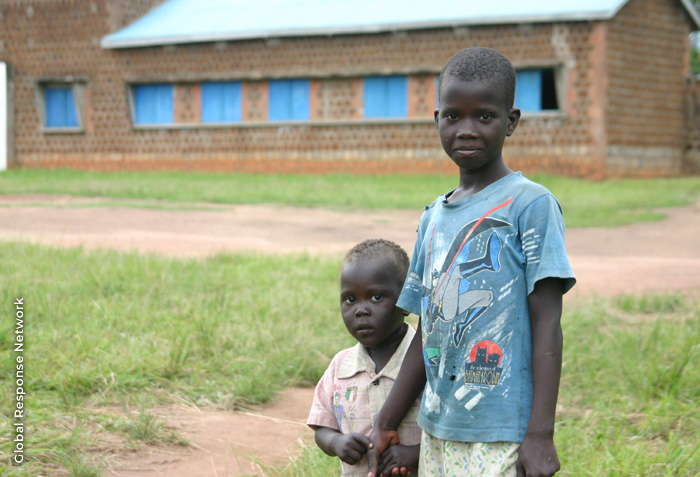
During this transitional period, VOMC remained deeply engaged in the crucial process of revitalizing the Christian community in South Sudan. A key part of this effort was our partnership with the Global Response Network (GRN), an organization working closely with local Christians. GRN took time to listen to the heartfelt needs and aspirations of South Sudanese believers, who expressed a strong desire for meaningful Christian education.
In response, VOMC and GRN diligently collaborated with the community to restore the historic Nugent School – a powerful symbol of hope, learning and renewal. Throughout this endeavour, GRN maintained a posture of humility, never claiming the school as its own. Instead, they viewed their efforts as a profound opportunity to aid in the reconstruction of Christian lives and communities that had endured years of harrowing conflict and devastation. Their commitment reflects a broader mission to help heal the wounds of war and nurture a brighter future for the people of South Sudan. In 2011, GRN transferred administrative control and ownership of the Nugent School to local community leaders, ensuring its continued impact for future generations.
I can only imagine the joy and fulfillment Nehemiah must have felt when God called him to help rebuild a broken community. Just as Israel and Judah needed restoration after the Babylonian conquest, today’s persecuted church also longs for support to rise from the ashes.
As we stand shoulder to shoulder with these precious brothers and sisters in Christ, we witness a resilient faith that remains unshaken by the weight of oppression. Amid the work of rebuilding lives – through both tears and perseverance – hope continues to emerge, bursting forth in shouts of joy and songs of praise to the Lord who faithfully watches over His church.
To God be the glory!
Grace and peace,

Floyd A. Brobbel
Chief Executive Officer
Voice of the Martyrs Canada Inc.