Canadian Marriage Commissioner Expects to Be a Victim of Gay Marriage Law
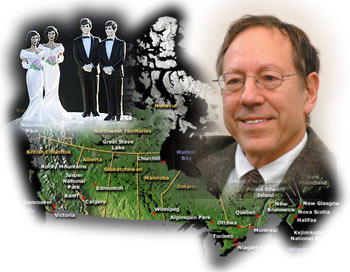
Canadian Justice Minister, Irwin Cotler
With the passage of Canadian bill C-38 in the House of Commons and the Senate, the legalization of gay marriage in Canada is expected to receive royal assent today. When the bill was being debated, Canadian Justice Minister Irwin Cotler, repeatedly promised that religious rights would not violated with this law. However, those promises ring hollow for provincially appointed marriage commissioners. Several provincial governments have demanded that they perform same-sex marriages. According to a July 19 article in The Globe and Mail, at least one in ten commissioners have resigned in Newfoundland after being told they must perform the ceremonies. At least twelve commissioners in Manitoba and eight in Saskatchewan have followed suit. However, Orville Nichols from Regina, Saskatchewan has refused to resign.
In May, Nichols was asked to perform a same-sex marriage and refused. The couple filed a complaint with the Saskatchewan Human Rights Commission. In light of Nichols and others like him, Cotler said, "One should be able to find a way of accommodating those who for reasons of conscience feel they don't want to perform a same-sex marriage." Saskatchewan's Justice Minister Frank Quennell made his position clear in late 2004 when he said that marriage commissioners are expected to follow the law and could lose their jobs if they do not marry same-sex couples.
In light of the same-sex marriage legislation, VOMC's Communications Director, Glenn Penner, has written a weblog on the Roman Catholic Church's response to members of parliament who supported bill C-38. We encourage you to read his commentary and answer our online poll click here.
On March 25th, after months of committee proceedings and deliberations in the House of Commons, Canada's governing Liberal Party has forced an end to the debate – resulting in the passage of the controversial Bill C-9. The legislation has now moved to the Senate for further consideration.
VOMC's primary mission is to respond to the needs of Christians in countries where persecution is prevalent. However, we also remain alert to potential threats to our religious freedoms here in Canada – including those that hinder the proclamation of the Gospel. One of the more recent concerns relates to proposed amendments to Bill C-9, which is currently under review by members of the Canadian Parliament.
The Supreme Court of Canada has announced that they will be releasing their decision regarding Trinity Western University's School of Law on Friday, June 15th. The ruling could have wide-ranging implications on the protection of religious freedoms in Canada.
The first few weeks of the Solitary Refinement touring stage play has already had audiences in various parts of the nation captivated. On numerous occasions, those who have been blessed to witness this life-transforming production have responded with standing ovations -- to the glory of God!